What to sow in November in NZ & AU: harvest by January
Fast summer crops to sow in November in New Zealand and Australia, grouped by when you can pick them: early December, late December and January.
Written by Conor, a NZ gardener building Plant Journal
Published
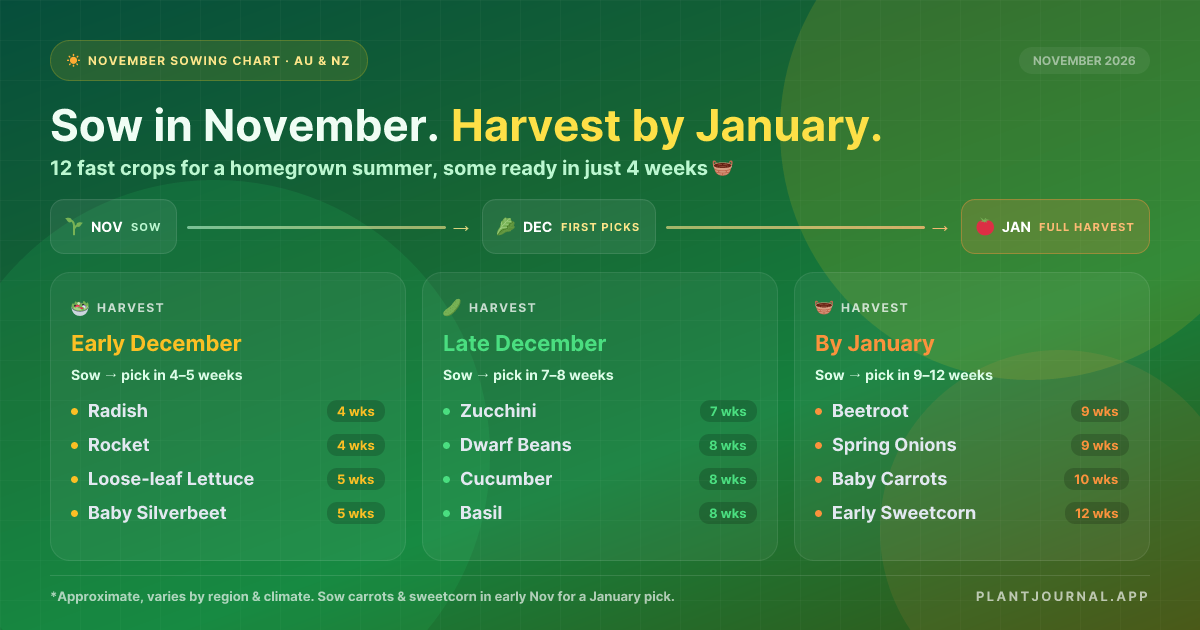
November sowing at a glance
| Crop | How to sow | WeeksWeeks to harvest | Ready |
|---|---|---|---|
| RadishDirect sow | Direct sow | 4 | Early December |
| RocketDirect sow | Direct sow | 4 | Early December |
| Leaf lettuceDirect sow or seedlings | Direct sow or seedlings | 5 | Early December |
| Baby silverbeetDirect sow | Direct sow | 5 | Early December |
| Zucchini (courgette)Direct sow or seedlings | Direct sow or seedlings | 7 | Late December |
| Dwarf beansDirect sow | Direct sow | 8 | Late December |
| CucumberDirect sow or seedlings | Direct sow or seedlings | 8 | Late December |
| BasilSeedlings, or sow into warm soil | Seedlings, or sow into warm soil | 8 | Late December |
| BeetrootDirect sow | Direct sow | 9 | Early January |
| Spring onionsDirect sow | Direct sow | 9 | Early January |
| Baby carrotsDirect sow (early November) | Direct sow (early November) | 10 | Mid January |
| Sweetcorn (early variety)Direct sow in blocks (early November) | Direct sow in blocks (early November) | 12 | Late January |
🌱 Track every sowing and get a nudge when it's time to harvest.
Try Plant JournalNovember is the month things finally take off. The soil is warm, the days are long, and seeds that sulked in September now come up in days. Choose the right crops and you can be picking salad by early December and eating your own sweetcorn in January.
This guide groups November sowings by when you'll be harvesting them, not by plant family, so you can plan a steady supply through summer instead of one big glut.
How to read this guide. The timings assume you sow in the first week of November, directly into warm soil in a sunny spot. The section headings show when you'll be picking, not when to sow. Cooler areas, shade, dry spells and the variety you choose can all add a week or two.
Early December: salad in 4 to 5 weeks
Sown in early November, these are ready from the end of November into early December. Sow a short row every two to three weeks and you'll have a steady supply instead of everything at once.
- Radish (about 4 weeks). Sow thinly, 1 cm deep. Keep them moist: radishes that dry out turn hot and woody. Pull them as soon as they're a good size, as they go pithy if left.
- Rocket (about 4 weeks for baby leaves). Pick leaves young. In hot weather rocket runs to flower quickly, so give it a spot with afternoon shade.
- Leaf lettuce (about 5 weeks). Loose-leaf types like oakleaf and cos are faster than hearting lettuce, and you can pick the outer leaves for weeks. Lettuce seed can refuse to germinate in very hot soil, so sow in the evening and keep the bed damp.
- Baby silverbeet (about 5 weeks). Pick leaves small for salads, or leave a few plants to grow on. Silverbeet keeps producing for months, so one sowing goes a long way.
Late December: summer veg in 7 to 8 weeks
Sown in early November, these are ready in the second half of December. They need warm soil to get going (about 16°C and up), which is why November suits them better than October in most of NZ and southern Australia.
- Zucchini, or courgette (about 7 weeks). One or two plants are plenty for most households. Pick at 15 to 20 cm and check every couple of days: they turn into marrows fast.
- Dwarf beans (about 8 weeks). Sow 3 to 5 cm deep straight into the garden. No staking needed. The more you pick, the more they produce.
- Cucumber (about 8 weeks). Give them something to climb and water deeply and regularly, as uneven watering makes bitter fruit. Lebanese types crop quickly and are great for small gardens.
- Basil (about 8 weeks from seed, quicker from seedlings). Basil hates the cold, so wait for warm nights. Pinch out the tips to keep it bushy and stop it flowering.
January: 9 to 12 weeks
Sown in early November, these are ready from early to late January. They take longer, so sow them in the first half of November: later sowings will be ready in February instead.
- Beetroot (about 9 weeks for baby beets). Soak the seed for a few hours before sowing. Each "seed" is a cluster, so thin the seedlings to one every 8 to 10 cm.
- Spring onions (about 9 weeks). Sow in a short row and pull as needed. Easy, and they don't mind a bit of shade.
- Baby carrots (about 10 weeks). The hard part is germination: keep the soil surface damp until they come up, which can take one to three weeks. A plank or damp sacking laid over the row helps; lift it as soon as you see seedlings.
- Early sweetcorn (about 12 weeks, so late January). Sow in a block of short rows rather than one long line, because sweetcorn is pollinated by wind. Choose an early-maturing variety and sow in the first week of November to have cobs before February.
Regional notes for NZ and Australia
New Zealand
- Northland, Auckland and the warmer North Island: everything on this list goes in now. Start giving salad crops afternoon shade later in the month.
- Lower North Island, Nelson and Marlborough: prime sowing time. Shelter young seedlings from strong spring winds.
- Canterbury, Otago, Southland and inland areas: late frosts are still possible in early November, especially inland and in Central Otago. Keep frost cloth handy for courgettes, cucumber, basil and beans, or wait until mid-month to sow them.
Australia
- Cool and temperate areas (Melbourne, Adelaide, Hobart, Canberra): November is one of the best months for this whole list. Canberra and inland areas can still get a late frost early in the month.
- Warm temperate areas (Sydney, Perth): sow it all now, but give lettuce, rocket and radish some afternoon shade and plenty of water as it heats up.
- Subtropical areas (Brisbane and the coast north of it): heat and humidity make lettuce and rocket bolt quickly, and cucumbers and zucchini can get mildew. Favour heat-lovers like beans, cucumber and sweetcorn, and sow salads in the shadiest spot you have.
- The tropics (Darwin, Cairns): the build-up and wet season are starting, and most of this list does better in your dry season. Instead, try wet-season crops like snake beans, okra, sweet potato, kangkong and Ceylon spinach, and plant on mounds or raised beds so roots don't sit in water.
Tips for a better November sowing
- Sow little and often. A short row every two to three weeks beats one big sowing that's all ready the same week.
- Water before and after sowing. Then keep the surface damp until seedlings appear, as small seeds dry out fast in November sun.
- Mulch once seedlings are up. It keeps roots cool and cuts watering a lot as summer arrives.
- Write it down. Note what you sowed and when. It's the easiest way to know when to check for a harvest, and what worked for next year.
Next month: our December garden jobs checklist covers watering, pests to watch for and what's ready to pick.
Common questions
Is it too late to plant tomatoes in November?
No. November is a good time to plant tomato seedlings in most of NZ and southern Australia. Planted as seedlings in early November, early and cherry varieties can start fruiting in about 10 weeks (mid to late January). Bigger varieties take longer, into February, which is why tomatoes aren't on the chart.
Can I still sow carrots in November?
Yes. Sow them in the first half of the month for a January harvest, and keep the seedbed damp until they come up. Later sowings are fine too: they'll just be ready in February.
Is zucchini the same as courgette?
Yes. It's the same plant: most New Zealanders say courgette and most Australians say zucchini. Sow it in November and you can be picking from late December.
Why do my lettuces go bitter and flower so quickly?
Heat and dry soil. Choose loose-leaf types, sow small batches more often, give them afternoon shade and keep them well watered.
How do I keep track of what's ready when?
Write down each sowing date and add the weeks from the table above. Or log it in Plant Journal, which estimates when each crop should be ready based on your local weather.